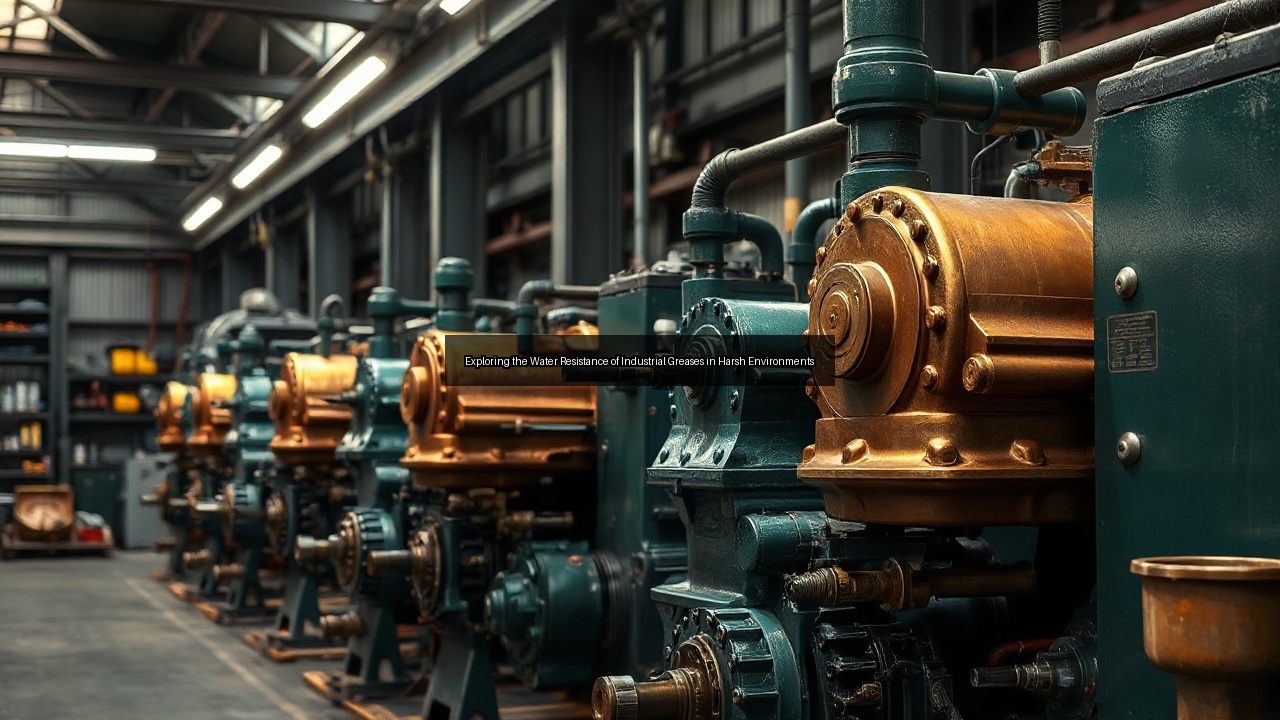
Exploring the Water Resistance of Industrial Greases in Harsh Environments
Understanding Industrial Greases and Their Composition
Key Ingredients in Industrial Greases
Industrial greases serve as essential lubricants in various applications, ensuring smooth operation and longevity of machinery. The primary ingredients in industrial grease include base oils, thickeners, and additives. Base oils, often mineral or synthetic, provide the fundamental lubricating properties. Thickeners, such as lithium, calcium, and polyurea, enhance the grease's consistency and performance under various conditions. Additives further improve the grease's effectiveness by offering properties like corrosion resistance, oxidation stability, and water resistance. The selection of these components directly influences the grease's performance, especially in harsh environments where exposure to moisture, temperature fluctuations, and pressure changes occurs frequently.
Role of Thickeners in Water Resistance
Thickeners play a crucial role in determining the water resistance of industrial greases. These substances increase the viscosity of the base oil, preventing it from separating or washing away when exposed to water. Lithium-based grease is a popular choice due to its excellent water resistance, high-temperature stability, and ability to maintain its consistency under pressure. Calcium greases, on the other hand, excel in water resistance and are often found in applications where moisture is prevalent. Polyurea thickeners offer unique properties, including better shear stability and lower oil bleed, making them suitable for high-performance applications. Understanding the role of these thickeners is vital for selecting the right grease for specific industrial applications.
Classification of Industrial Greases by NLGI Grades
The National Lubricating Grease Institute (NLGI) classifies industrial greases based on their consistency, which directly impacts their performance in various applications. NLGI grades range from 000 (fluid) to 6 (solid), with most industrial greases falling between grades 0 and 3. Greases with a lower NLGI grade provide easier application and are better suited for low-temperature environments, while higher grades offer superior stability under high temperature and pressure. This classification system simplifies the selection process for engineers and maintenance professionals. Choosing the appropriate NLGI grade ensures that the grease meets the specific requirements of the machinery or equipment, enhancing overall performance and reliability.
Water Resistance in Harsh Environments
Importance of Water Resistance in Lubrication
Water resistance is a critical factor in the effectiveness of lubricants, especially in harsh industrial environments. Machinery often operates in conditions where water exposure is inevitable, leading to potential issues such as rust, corrosion, and premature wear. A lubricant with strong water resistance prevents water ingress, maintaining a protective film that reduces friction and wear on moving parts. This capability is vital for components like wire ropes and heavy machinery, which endure extreme conditions. Industrial greases with enhanced water resistance ensure that equipment runs smoothly, minimizing downtime and maintenance costs. Ultimately, effective water-resistant lubrication extends the lifespan of machinery and enhances operational efficiency.
Factors Affecting Water Resistance: Temperature and Pressure
Temperature and pressure significantly impact the water resistance of industrial greases. High temperatures can cause grease to thin, reducing its effectiveness and potentially leading to separation of the base oil and thickener. Conversely, in low-temperature scenarios, certain greases may harden, losing their lubricating properties. Additionally, pressure plays a crucial role; under high loads, the grease must maintain its integrity to prevent failure. The right combination of thickener and base oil can enhance a grease's performance under extreme temperatures and pressure, ensuring consistent lubrication. Engineers must consider these factors when selecting greases for specific applications, ensuring they withstand the rigors of their operational environment.
Comparative Analysis of Various Grease Types: Lithium vs. Calcium vs. Polyurea
Lithium, calcium, and polyurea greases each offer unique advantages and disadvantages, particularly concerning water resistance. Lithium-based grease is widely recognized for its versatility and high-temperature performance, making it suitable for a range of applications. Its water resistance is commendable, but it may not perform as well as calcium greases in extreme moisture conditions. Calcium greases excel in water resistance and are often the go-to choice for applications in wet environments. Polyurea greases, while more expensive, provide excellent shear stability and lower oil bleed, making them ideal for high-performance machinery. Each type has a specific role in industrial applications, and understanding their characteristics allows for informed decision-making in grease selection.
Engineering Applications and Performance
Water-Resistant Greases for Machinery and Equipment
Water-resistant greases are integral to the performance of various machinery and equipment used in industrial settings. These greases protect components from moisture damage, ensuring efficient operation across a wide range of applications, from automotive to manufacturing. For instance, in construction equipment, water-resistant greases prevent rust and corrosion, extending the life of critical components. Similarly, in marine applications, greases must withstand constant exposure to saltwater, making water resistance non-negotiable. Engineers often specify water-resistant greases for bearings, gears, and other moving parts to enhance performance and reduce maintenance costs. The right grease selection not only improves machinery reliability but also contributes to overall operational efficiency.
The Role of Base Oils and Additives: Aluminum, Clay, and Fumed Silica
Base oils and additives significantly influence the performance of industrial greases. Base oils, whether mineral or synthetic, provide the necessary lubrication, while additives enhance properties such as water resistance, oxidation stability, and wear protection. Aluminum-based greases offer excellent water resistance and are often used in demanding applications. Clay thickeners contribute to the grease's consistency and stability, while fumed silica enhances the grease's resistance to wear and shear. By carefully selecting the right combination of base oils and additives, manufacturers can create specialized greases tailored to specific industrial needs. This tailored approach ensures that greases not only perform well but also meet the rigorous demands of modern engineering applications.
Case Studies: Effective Use of Greases in Wire Rope and Heavy Machinery
Real-world applications of water-resistant greases highlight their importance in industrial settings. In wire rope applications, for example, the use of specialized greases prevents corrosion and wear, ensuring the safety and reliability of lifting equipment. Greases formulated with calcium thickeners often demonstrate superior water resistance, making them ideal for marine environments. In heavy machinery, lithium-based greases support high-load operations while maintaining stability under varying temperatures and pressure. These case studies underscore the need for selecting appropriate greases based on environmental conditions and operational requirements. Engineers continually seek solutions that enhance performance, reduce maintenance, and prolong the lifespan of critical machinery.
Challenges and Innovations in Industrial Greasing
Oxidation and Degradation: Lifespan of Industrial Greases
Oxidation and degradation present significant challenges in the longevity of industrial greases. Over time, exposure to heat, moisture, and oxygen can cause greases to break down, losing their lubrication properties. This degradation results in increased friction, wear, and potential machinery failure. To combat these issues, manufacturers incorporate antioxidants into grease formulations, enhancing their resistance to oxidation and extending their usable life. Regular monitoring of grease condition and timely reapplication can also mitigate the effects of degradation. Engineers and maintenance personnel must remain vigilant, ensuring that the selected grease remains effective throughout its intended lifespan, especially in harsh environments where performance is critical.
Future Trends in Industrial Lubricants and Greases
The future of industrial lubricants and greases points toward innovations focused on sustainability and performance. As industries prioritize environmental responsibility, manufacturers are exploring bio-based greases that offer excellent performance without the environmental impact of traditional petroleum-based products. Additionally, advancements in nanotechnology may lead to the development of greases with enhanced properties, such as improved water resistance and reduced friction. These trends not only aim to improve performance but also address the growing demand for environmentally friendly solutions. Engineers must stay informed about these developments to choose lubricants that align with industry standards and sustainability goals.
Brand Comparisons: Leading Names in Water-Resistant Industrial Greases
Several brands dominate the industrial grease market, each offering unique formulations that cater to specific needs. Companies like Mobil, Shell, and Klüber are recognized for their high-performance water-resistant greases. Mobil's lithium-based formulations stand out for their versatility, while Shell offers a range of calcium greases renowned for their exceptional water resistance. Klüber specializes in innovative solutions, including polyurea greases that excel in demanding applications. Evaluating these brands based on performance, application, and cost allows engineers to make informed choices. Understanding the strengths of each brand ensures that organizations select the most suitable grease for their specific industrial applications.
See Also
- Temperature Tolerance in Industrial Greases What You Need to Know
- Choosing the Right Industrial Grease for Wire Rope Maintenance
- The Science of Oxidation and Its Effect on Industrial Grease Longevity
- Mineral vs Synthetic Grease Which Should You Choose for Your Equipment
- Hydroxy-Functional Greases The Next Frontier in Industrial Lubrication